
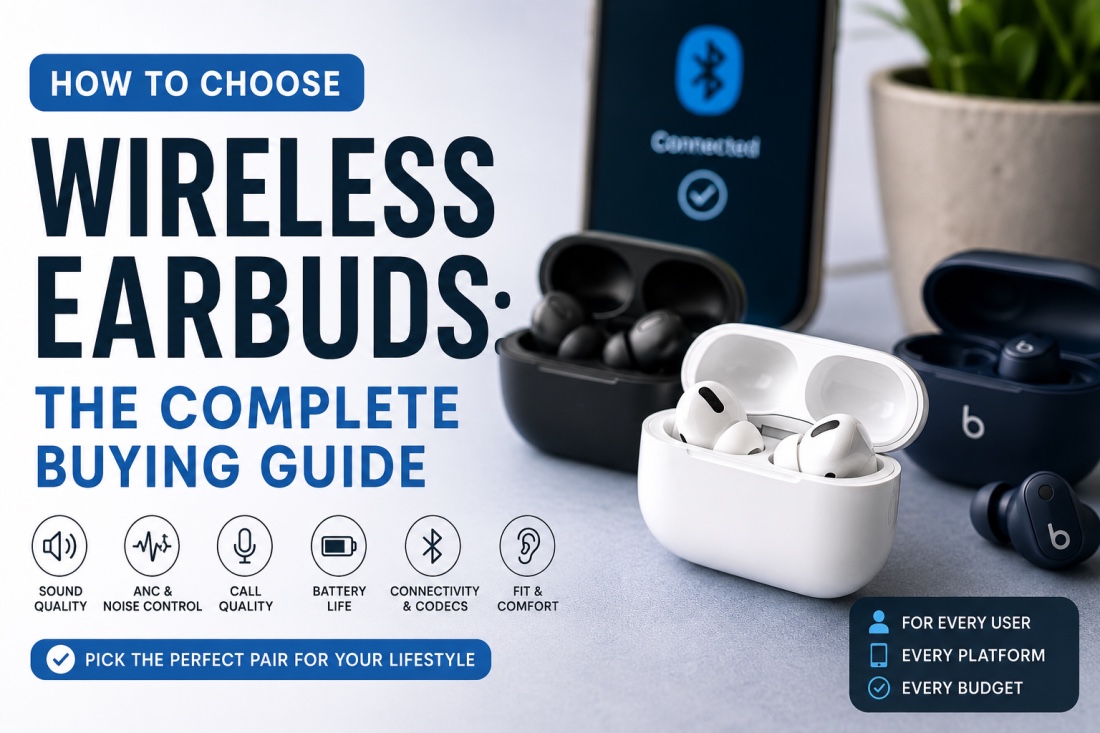
In my opinion choosing wireless earbuds feels simple until you start comparing them. One model promises longer battery life, another claims superior noise cancellation, a third emphasises call quality or spatial audio, and the marketing language rarely explains what any of it means in daily use. The result is that many people buy based on brand recognition, a single impressive number, or a temporary discount—and then discover the earbuds fall out during runs, sound thin on calls, or lose connection more often than expected.
I have written this guide to simplify this problem. It focuses on the factors that actually determine whether you will still be happy with the earbuds six months later: fit and comfort, sound that matches your preferences, noise cancellation when you need it, microphones that work in real environments, battery life you can rely on, and compatibility with your phone or devices. By the end you should be able to look at any product page or comparison chart and decide which specifications matter for your situation and which ones you can safely ignore.
Quick Answer
If you are choosing wireless earbuds in 2026, prioritize **fit and seal first**, then **sound quality and call performance**, followed by **ANC effectiveness** (if you need it), **reliable battery life**, and **device compatibility** and of course the price to pay.. The longest specification sheet is rarely the best choice. A model that stays secure, sounds clear for your music and podcasts, handles calls without constant “can you hear me?” questions, and works smoothly with your phone will outperform a higher-spec pair that fails on any of those basics.
Most buyers get the best results by matching three or four priorities to their real use rather than chasing every feature. I do choose a proper fit you know and it’s a big ask from my side!!!
Main Buying Factors
These are the factors that consistently affect satisfaction. Their relative importance changes with how and where you use the earbuds.
1. Fit and Comfort Wireless Earbuds
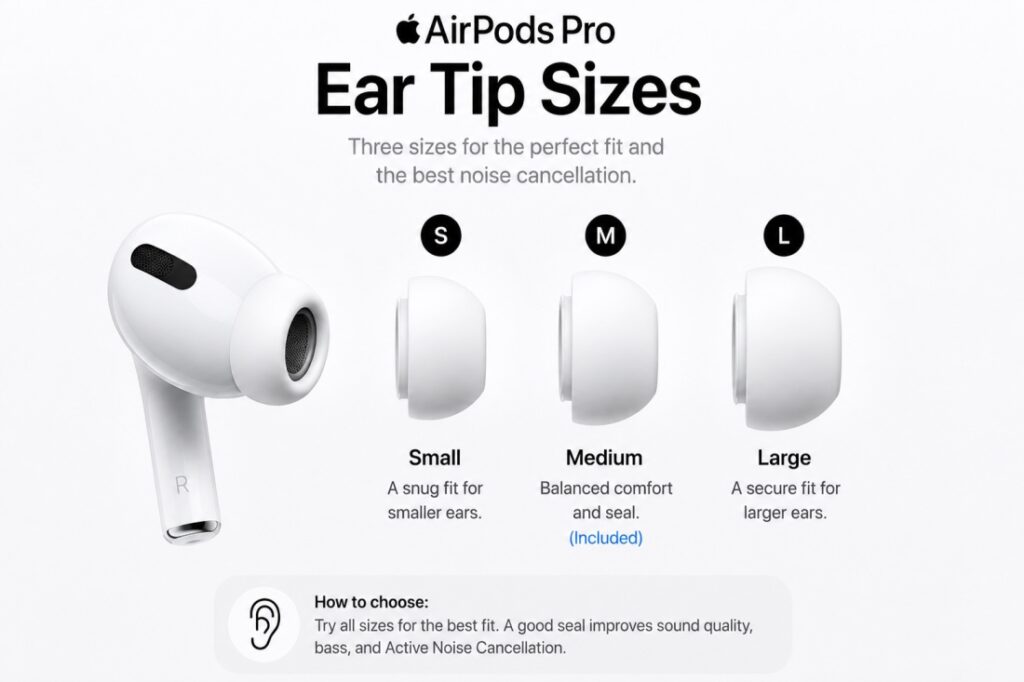
Fit is the foundation. A poor seal reduces bass, weakens passive isolation, makes ANC less effective, and increases the chance the earbuds will fall out .. Look for multiple tip sizes (and preferably wing or fin options for sport models). Weight and shape matter for long sessions. If possible, check return policies—fit is highly individual and no review can guarantee it for your ears.
2. Sound Quality
“Good sound” is partly preference (bass-heavy vs neutral) and partly technical (driver design, tuning, and how well the seal works). More drivers or higher advertised frequency response numbers do not automatically mean better sound. What matters is whether the earbuds deliver clear mids and highs for voices and instruments and controlled bass that does not overwhelm everything else. App EQ is useful when it is well implemented.
3. Active Noise Cancellation (ANC) and Transparency
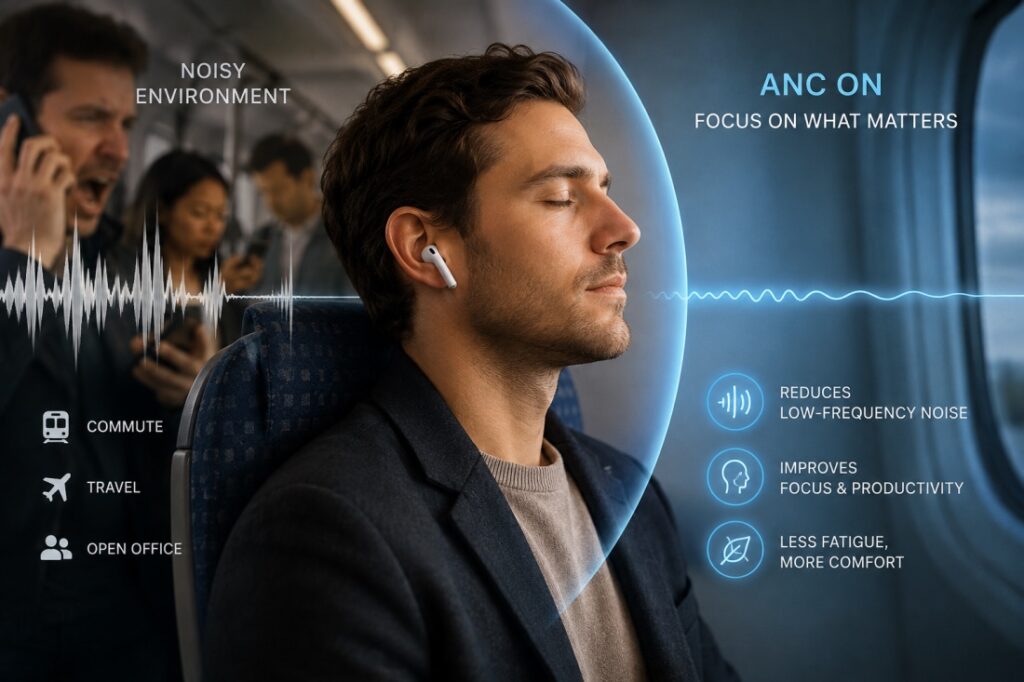
ANC (read here to know about it more )is valuable for commuting, flying, or open offices. Its effectiveness depends heavily on seal quality and the specific implementation. Transparency (or ambient) mode should sound natural if you need to hear announcements or have short conversations without removing the Wireless Earbuds. Not everyone needs strong ANC; if you mostly use earbuds at home or in quiet places, you can deprioritize it.often it happens often when you wear your earbuds at home and activate noise canceling then your family keeps on yelling at you because you dont hear there voices…Of course in emergency situation its a big problem and you should definitely depolarize it at home.
4. Microphone and Call Quality
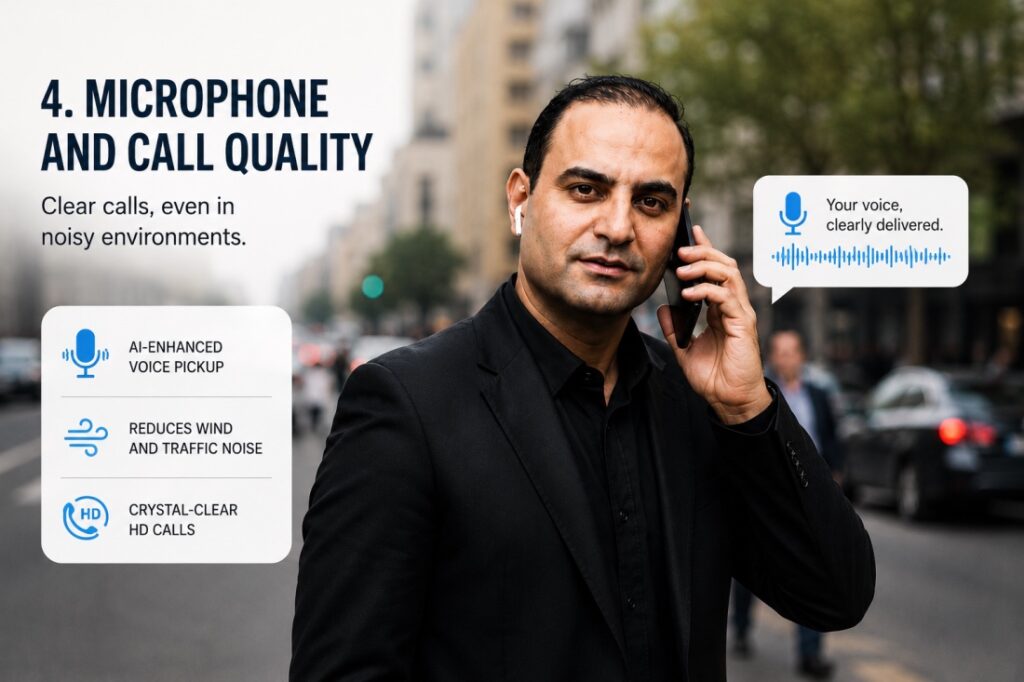
This is the most common post-purchase disappointment. Multiple microphones plus AI noise reduction help, but wind, traffic, and busy rooms still challenge most Wireless Earbuds. If you take frequent calls, look for independent reviews that specifically test call quality in realistic conditions rather than relying on the manufacturer’s marketing photos of people on video calls.
We recommend a beautiful Earbud with Visiting.
5. Battery Life and Charging
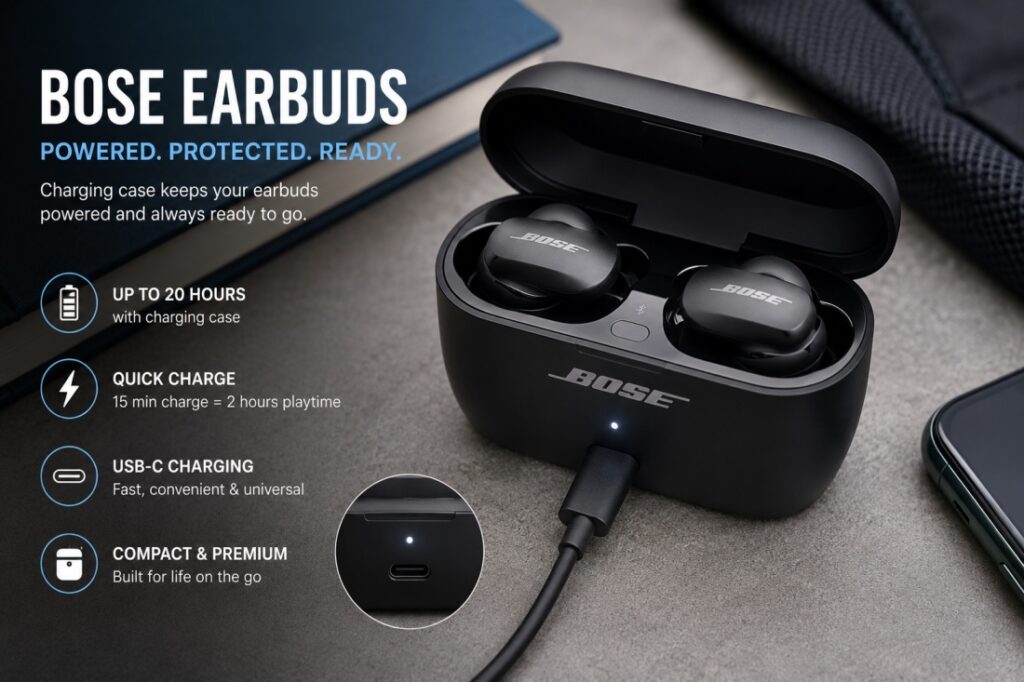
Manufacturer claims are usually measured at moderate volume without ANC. Real-world results with ANC on and higher volume are noticeably shorter. Consider both the earbuds themselves and the case capacity, plus whether the case supports wireless charging or fast charging. For most people, a realistic full-day total (earbuds + case) with some reserve is more important than the absolute highest claimed number and if your job is such where you require to use it all day long then it’s worth looking into.
6. Connectivity, Codecs, and Multipoint
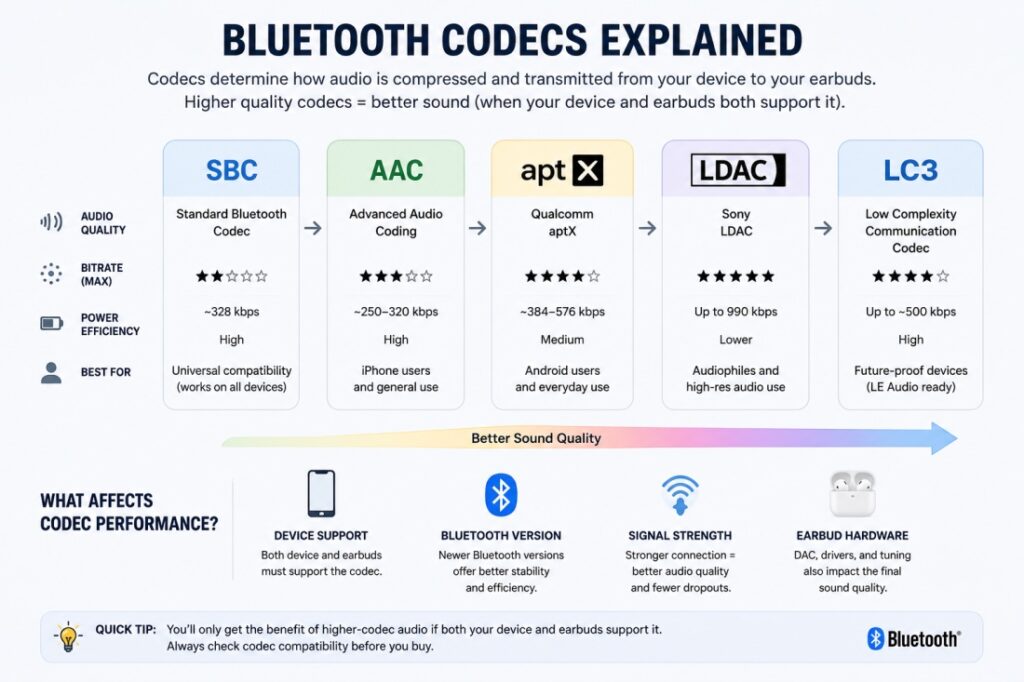
Bluetooth version matters less than stability and codec support. AAC is the practical standard for iPhone users. Android users benefit from aptX Adaptive, LDAC, or LC3 depending on the phone and earbuds. Multipoint (connection to two devices at once) is highly useful for people who switch between phone and laptop( This is most important). Latency is mainly relevant for gaming or watching video when the audio is not delayed.
7. Water and Dust Resistance
IPX4 is the practical minimum for sweat and light rain. Higher ratings (IPX5–IPX7 or IP54/IP55 and above) matter more for intense workouts or outdoor use in heavy weather. Remember that ratings are tested under controlled conditions; they are not a guarantee against every accident..
App Support and Ecosystem
A good companion app provides EQ, firmware updates, find-my features, and wear detection. Ecosystem integration (seamless switching, spatial audio, automatic device handoff) is strongest within Apple, Samsung, Google, or Sony environments. Cross-platform users should prioritize multipoint and reliable basic performance over exclusive features.Now a days you can find other third party earbuds with similar features too.
9. Price and Long-Term Value
Higher price often buys better materials, stronger ANC, more polished software, and longer support. It does not automatically buy dramatically better sound or comfort. Evaluate what the extra money actually improves for your use case. Higher price products offers value for money in long run.
Specification Explainer — What the Numbers Really Mean
Bluetooth Codecs
SBC is the baseline. AAC is optimized for Apple devices. aptX and aptX Adaptive offer lower latency and better efficiency on compatible Android devices. LDAC can deliver higher bitrate audio but is more sensitive to interference and drains battery faster. LC3 (part of Bluetooth LE Audio) is designed for better efficiency and quality at lower bitrates. For most listeners the practical difference is smaller than marketing suggests once the seal and tuning are good. Average buyers do not need the highest-spec codec if the basics are solid.
ANC “up to X dB” claims
These figures are rarely measured the same way across brands and do not predict real-world performance in your environment. Seal quality and the specific noise frequencies being cancelled matter more than the peak number.
Battery life claims
Almost always optimistic. Treat them as a relative ranking between models from the same brand under similar test conditions rather than a guaranteed daily figure.When you will use it in your daily life you will experience this.
Driver count and size
More or larger drivers can help, but implementation and tuning determine the result. A well-tuned single dynamic driver often outperforms a poorly implemented multi-driver setup.
IP ratings
IPX4 = splash and sweat resistant. Higher first digit (dust) and second digit (water) give more protection, but real-world durability also depends on build quality and how the Wireless earbuds are handled.
Real-World Buyer Types Wireless Earbuds
| Buyer type | What to prioritize | Why it matters |
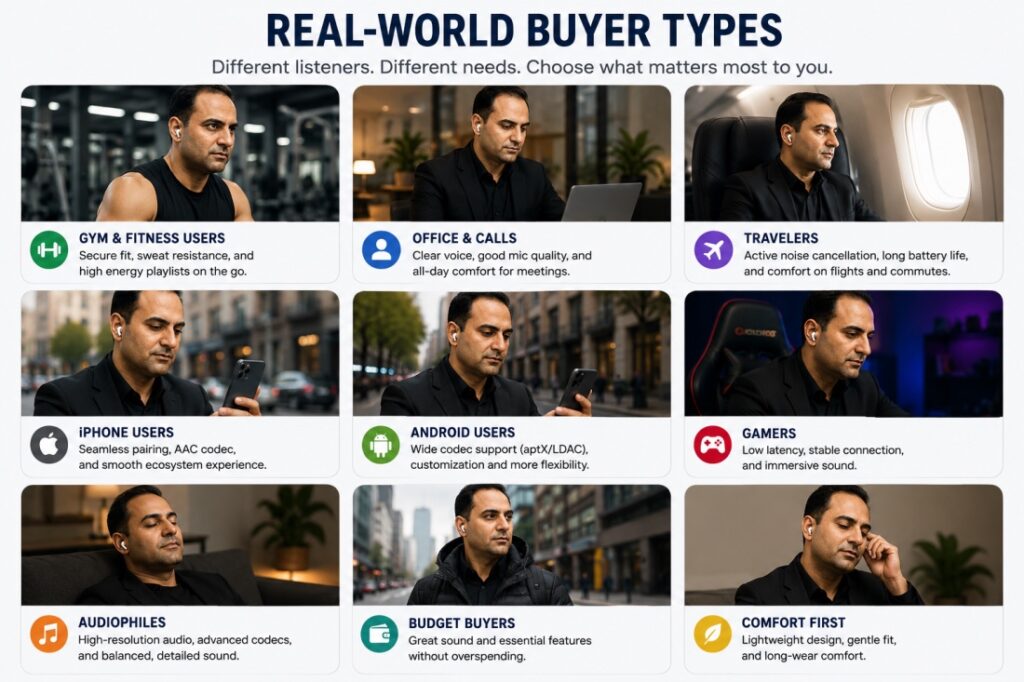
| 🍎 iPhone users | AAC support, seamless pairing, Spatial Audio, Find My | AirPods offer the easiest Apple ecosystem experience, although strong alternatives exist |
| 🤖 Android users | aptX Adaptive, LDAC or LC3 compatibility, multipoint, app support | Match codec support to your phone and look for reliable connectivity. |
| ✈️ Frequent travelers / commuters | Strong ANC, comfortable fit, good case battery | Reduces transport noise while remaining comfortable during long listening sessions. |
| 💼 Office / call-heavy users | Microphone quality, multipoint, call stability | Clear voice pickup and easy switching between phone and computer matter more than extreme audio specs.. |
| 🏋️ Gym & active users | Secure fit, wings/hooks, IPX4+ water resistance | Stability and sweat resistance are more important than premium materials. |
| 💰 Budget-focused buyers | Fit, sound quality, acceptable calls, battery life | You don’t necessarily need flagship ANC or premium construction. |
| 🎧 Audiophiles / critical listeners | Tuning, EQ, codec support, driver quality | Personal sound preference matters; remember that wireless earbuds have physical and codec limitations. |
Price and Value Considerations
🟢 Entry-level
Basic wireless convenience, acceptable sound for casual listening, and limited or no ANC. Fit and call quality can vary considerably.
Who it’s best for
- Budget-conscious users
who want reliable everyday listening
without paying for premium features..
🔵 Mid-range
SuBetter ANC, improved microphones, longer battery life, multipoint connectivity, and more refined sound. This tier often delivers the best balance of features and value.
Who it’s best for
- Most buyers looking for strong everyday performance without paying for premium extras.
P🟣 Premium
Take supStronger and more consistent ANC, better call handling in difficult environments, polished software, higher-quality materials, and deeper ecosystem features.
Who it’s best for
- Frequent travelers, heavy users, and buyers who will actually use the advanced features.
Spending more only makes sense when the specific improvements matter to you. A mid-range pair that fits well and handles calls cleanly is better value than a premium pair that does not.
What Specifications Don’t Tell You
– Bigger battery numbers do not guarantee you will finish the day without the case.
– Higher driver counts or “Hi-Res” labels do not automatically produce more enjoyable sound.
– Peak ANC figures do not guarantee quiet on your specific commute.
– An impressive IP rating does not protect against poor fit or eventual wear on the charging contacts.
– Marketing photos of people on video calls do not reflect real microphone performance in wind or traffic.
– Ecosystem features only matter if you stay inside that ecosystem.
Real-world seal, consistency of connection, microphone behavior in noise, and long-term software support are often more important than the headline specifications.
Common Buying Mistakes of Wireless Earbuds
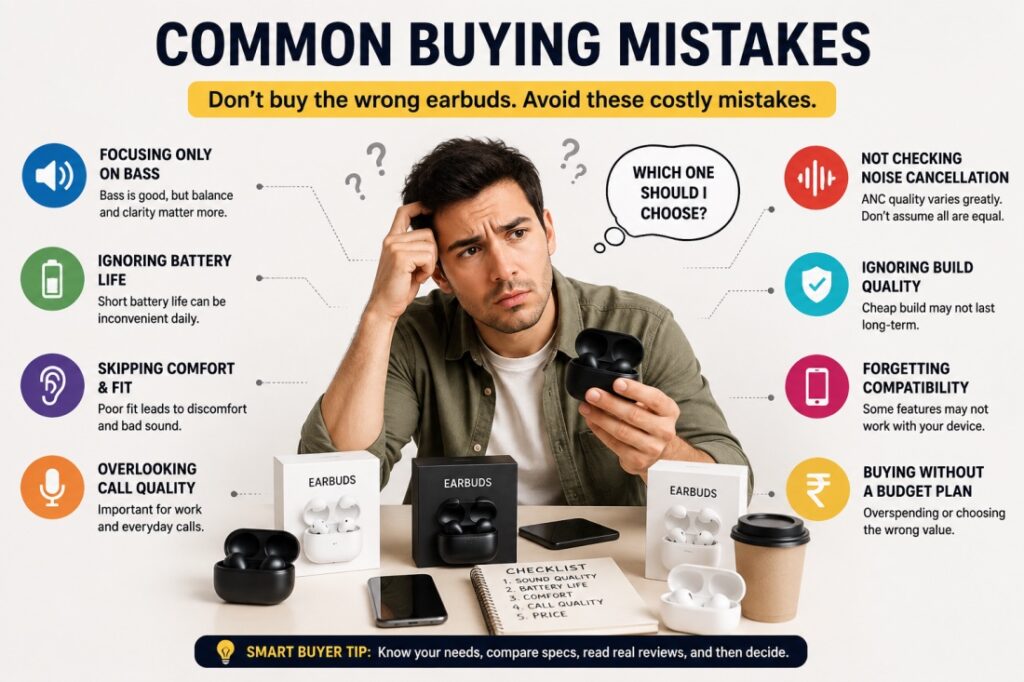
1. Choosing purely on price or a single flashy feature.
2. Ignoring fit and assuming one size will work.
3. Overvaluing ANC when you rarely need it.
4. Assuming call quality will be fine because the music sounds good.
5. Buying for features you will never use (advanced spatial audio, ultra-high codecs, etc.).
6. Skipping the return window—fit is personal.
7. Ignoring multipoint if you regularly switch between phone and computer.
How to Compare Products — A Practical Framework
| Question | What to check | Yes | No |
| Will they stay comfortable? | Fit and comfort during your typical listening sessions | ||
| Do they sound good enough? | Sound quality and tuning for the content you listen to most | ||
| . Are calls reliable? | Microphone quality and call performance in real-world conditions | ||
| Do I need ANC? | Whether you need strong ANC and whether the earbuds provide a good seal | ||
| s the battery sufficient? | Earbud and case battery life for your longest typical day | ||
| Will they connect reliably? | Device compatibility, Bluetooth reliability, multipoint and relevant codec support |
SCORE Guide
if you want this to be a real buying decision framework, the reader needs a scoring system. Otherwise the six questions are useful but don’t tell them how to choose between two earbuds.
I’d add a simple 100-point scoring system.
Ask these questions in order:
Wireless Earbuds Buying Scorecard
| Buying factor | Weight | What to score |
| Comfort & fit | 20 points | Comfort, stability and seal during your typical listening sessions |
| Sound quality | 20 points | Tuning, clarity, detail and suitability for your music/content |
| Call & microphone quality | 15 points | Voice clarity, background-noise handling and call reliability |
| ANC & transparency | 15 points | ANC effectiveness, transparency quality and seal |
| Battery life | 10 points | Earbud + case endurance for your typical day |
| Connectivity & codecs | 10 points | Connection stability, multipoint, device compatibility and codec support |
| Features & app | 5 points | EQ, controls, app quality, Spatial Audio and other useful features |
| Price & value | 5 points | Whether the overall package is worth the asking price |
| TOTAL | 100 points | Decide Which One To Buy |
If two models are close, prefer the one with better fit reports, stronger call-quality feedback, and more consistent software updates. Use case always beats pure specification ranking.
Recommended Approach (Category Framework)
Because specific models and pricing change, this guide focuses on decision logic rather than a fixed product list that would age quickly.
– **Best overall for most people**: A mid-to-upper mid-range model with proven fit options, competent ANC, solid microphones, multipoint, and good app support.
– **Best for budget**: Prioritize fit, basic sound, and acceptable calls over advanced ANC.
– **Best for calls / work**: Microphone performance and multipoint first.
– **Best for travel**: ANC effectiveness + comfort + case capacity.
– **Best for gym**: Secure fit + IP rating.
– **Best ecosystem match**: Choose within your phone’s platform when seamless switching and exclusive features matter more than pure audio metrics.
For best ecosystem here is the recommended open earbud for
Always cross-check current independent reviews for the specific models you shortlist, paying attention to fit comments, call tests, and real-world battery notes.
Who Should Buy / Who Should Skip (by priority)
| Buy Wireless Earbuds if… | Skip Wireless Earbuds or look elsewhere if… |
| Fit reports are consistently positive for people with similar ear shapes. | Fit is frequently criticized and return options are limited. |
| Your top priorities—such as calls, ANC, battery life or platform features—are clear strengths. | Call quality is a known weakness and you make frequent calls. |
| The extra cost pays for improvements you will notice regularly. | You are paying a large premium for features you are unlikely to use. |
| The brand provides reliable software support and updates. | Software support or update history appears weak, particularly from an unfamiliar brand. |
Final Verdict
Start with fit and the two or three features that match how you actually use earbuds. For most people in 2026 that means secure comfort, clear sound for music and speech, usable call quality, and reliable connection to their phone (and ideally a second device). ANC is excellent when you need it and optional when you do not. Battery life should be adequate for your longest day with some margin. Everything else is secondary.
A well-chosen mid-range pair that nails the basics will satisfy more owners than a flagship bought for specifications they rarely experience. Use this framework, shortlist two or three current models that match your priorities, check recent independent fit and call feedback, and take advantage of return policies. That process produces better results than chasing the highest numbers on a comparison chart.
Here is the best Open Earbud For Travel
FAQ
**Do I need active noise cancellation?**
Only if you regularly deal with continuous background noise (planes, trains, open offices, traffic). Otherwise you can save money and sometimes gain better battery life or simpler operation.
Are expensive wireless earbuds worth it?
They are worth it when the specific improvements (better ANC consistency, superior call handling, refined software, materials, or ecosystem features) match your daily needs. They are not automatically better value.
What is the most important factor when choosing wireless earbuds?
Fit and seal. Almost every other performance metric depends on it.
How important are Bluetooth codecs?
Useful for matching your phone and reducing latency, but secondary to fit, tuning, and microphones for most listeners.
Can I use Android earbuds with an iPhone (or vice versa)?
Yes for basic functionality. You lose some platform-specific features and optimal codec support.
How long should wireless earbuds last?
Battery degradation and physical wear (tips, charging contacts, hinges on the case) are the usual limits. Quality models with replaceable tips and ongoing software support typically give several years of good service with normal care.
Should I buy earbuds with a high IP rating?
IPX4 is sufficient for most sweat and light rain. Higher ratings add peace of mind for intense sports or outdoor use but do not replace careful handling.
Editor’s Note
Last updated: August 17, 2026
Prices, availability, specifications, and features can change. Always check the manufacturer’s or retailer’s current listing before purchasing. Recommendations are based on researched specifications and independent reviews; TechBuyGuide has not personally lab-tested every product listed.
Read More :- About Best travel Earbuds
techbuyguide@hotmail.com